
Application Notes
Articles
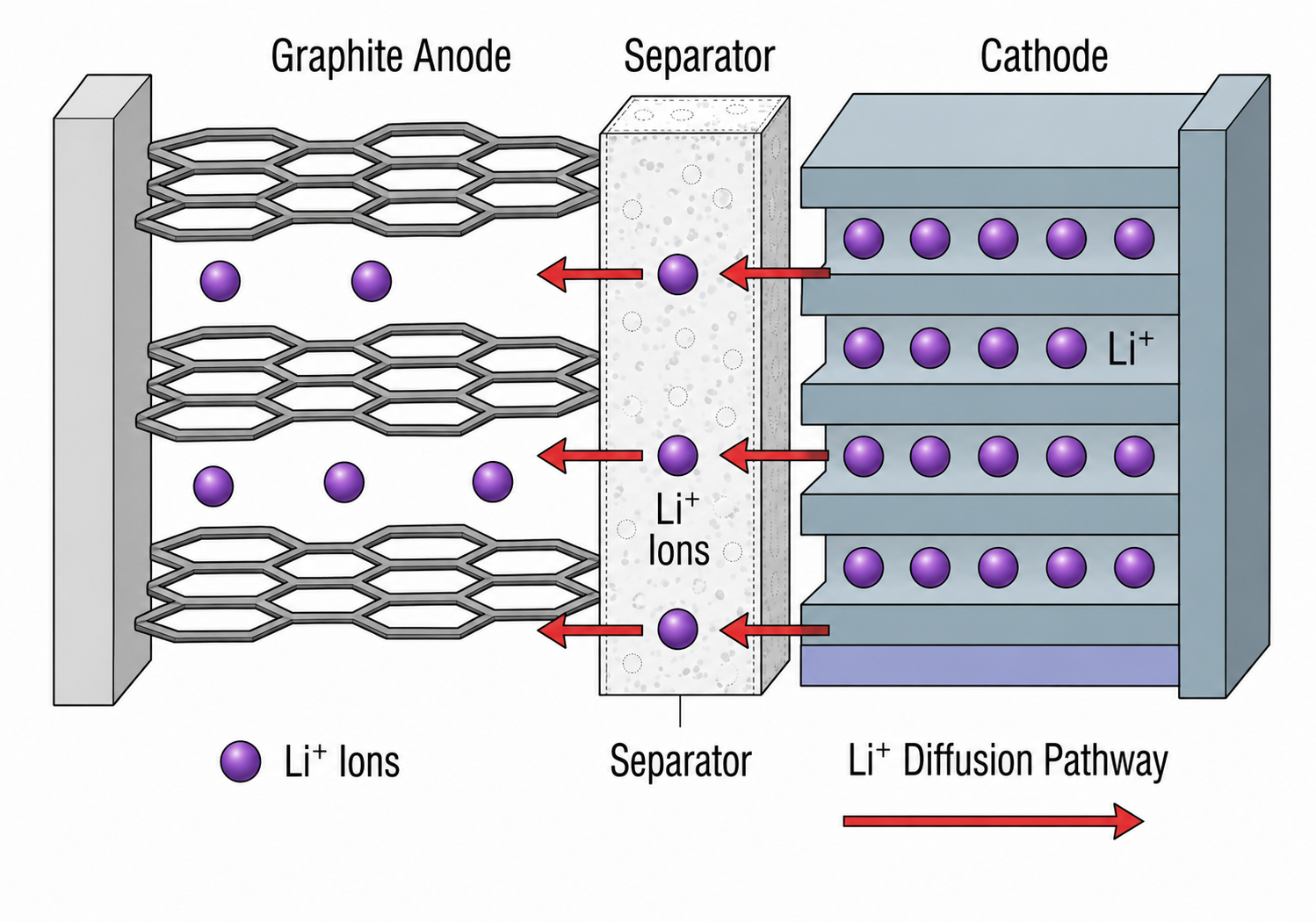
Potentiostatic Intermittent Titration Technique (PITT)
This application note is designed as a step-by-step guide for configuring and executing the Potentiostatic Intermittent Titration Technique (PITT) using PalmSens instrumentation and software. This technique is mainly used for studying diffusion of ions in batteries.
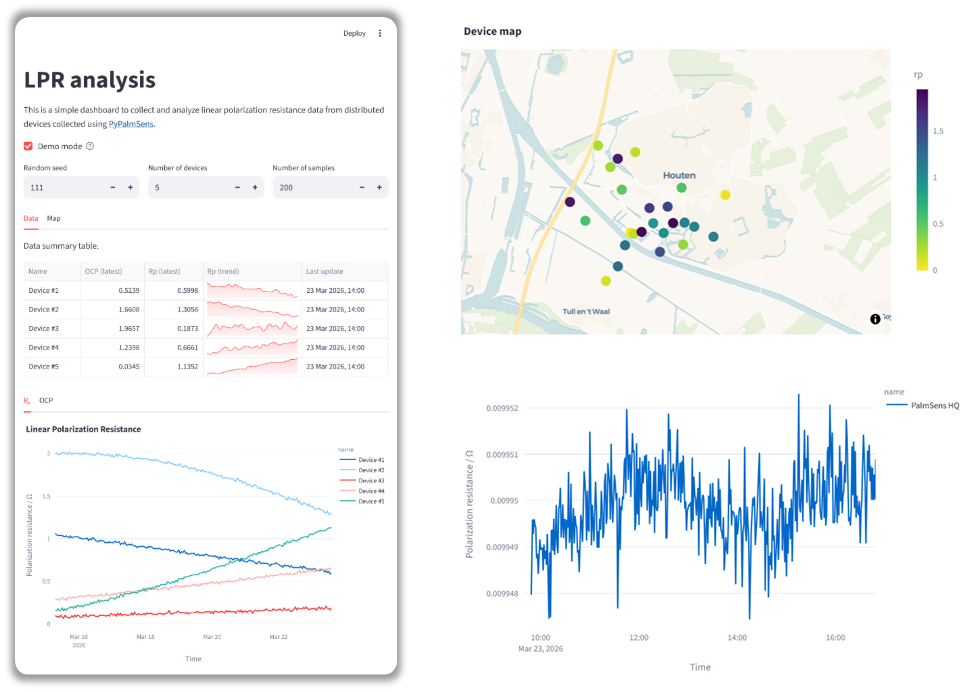
Remote IoT Corrosion Monitoring using Python
The goal for this application note is to show how to set up a remote IoT system for corrosion sensing using a PalmSens potentiostat coupled to a low-power single-board computer for connectivity. The idea is to have multiple of these 'in the field' attached to wind turbines, bridges, or other corroding infrastructure and monitor them via a central dashboard. The dashboard can be used to monitor corrosion rate over time.
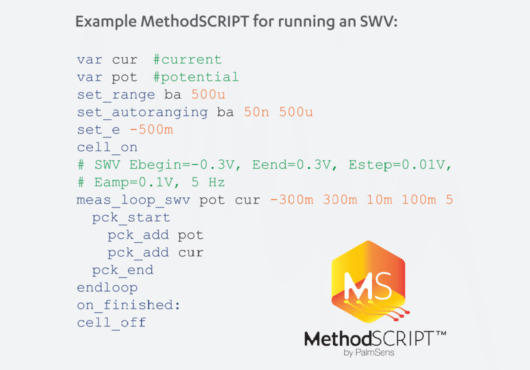
MethodSCRIPT for Battery Cycling
Use this MethodSCRIPT for cycling batteries with advanced tools.
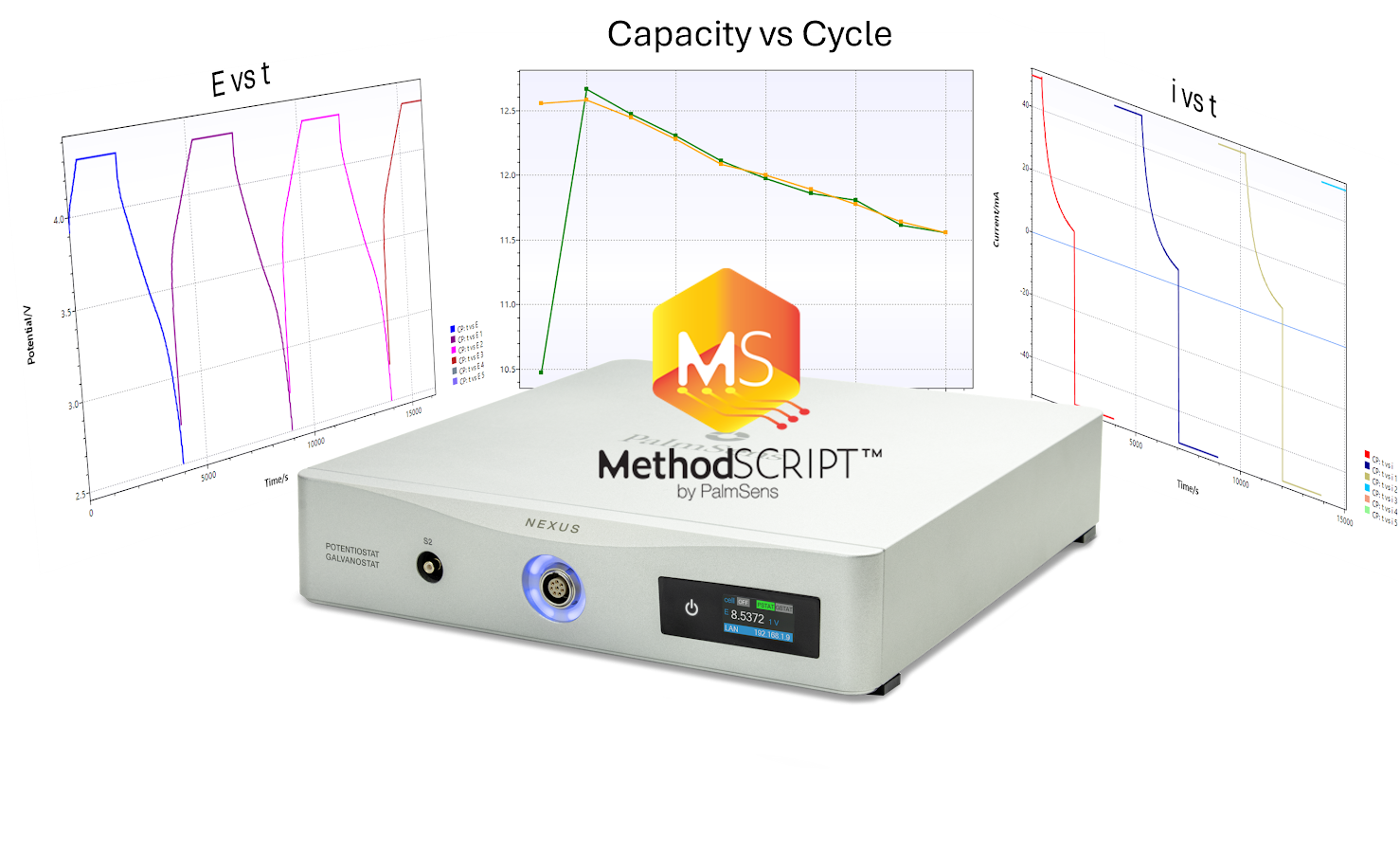
Advanced Battery Cycling with MethodSCRIPT
This application note is designed as a tutorial to use our pre-made MethodSCRIPT code for advanced battery cycling. If you are looking for detailed information about MethodSCRIPT refer to the MethodSCRIPT documentation.

Analyzing Electrochemical Noise Using Python
In this application note we show how to use Python to measure, process, and analyze Electrochemical Noise data using PalmSens instruments.
Spectroelectrochemistry
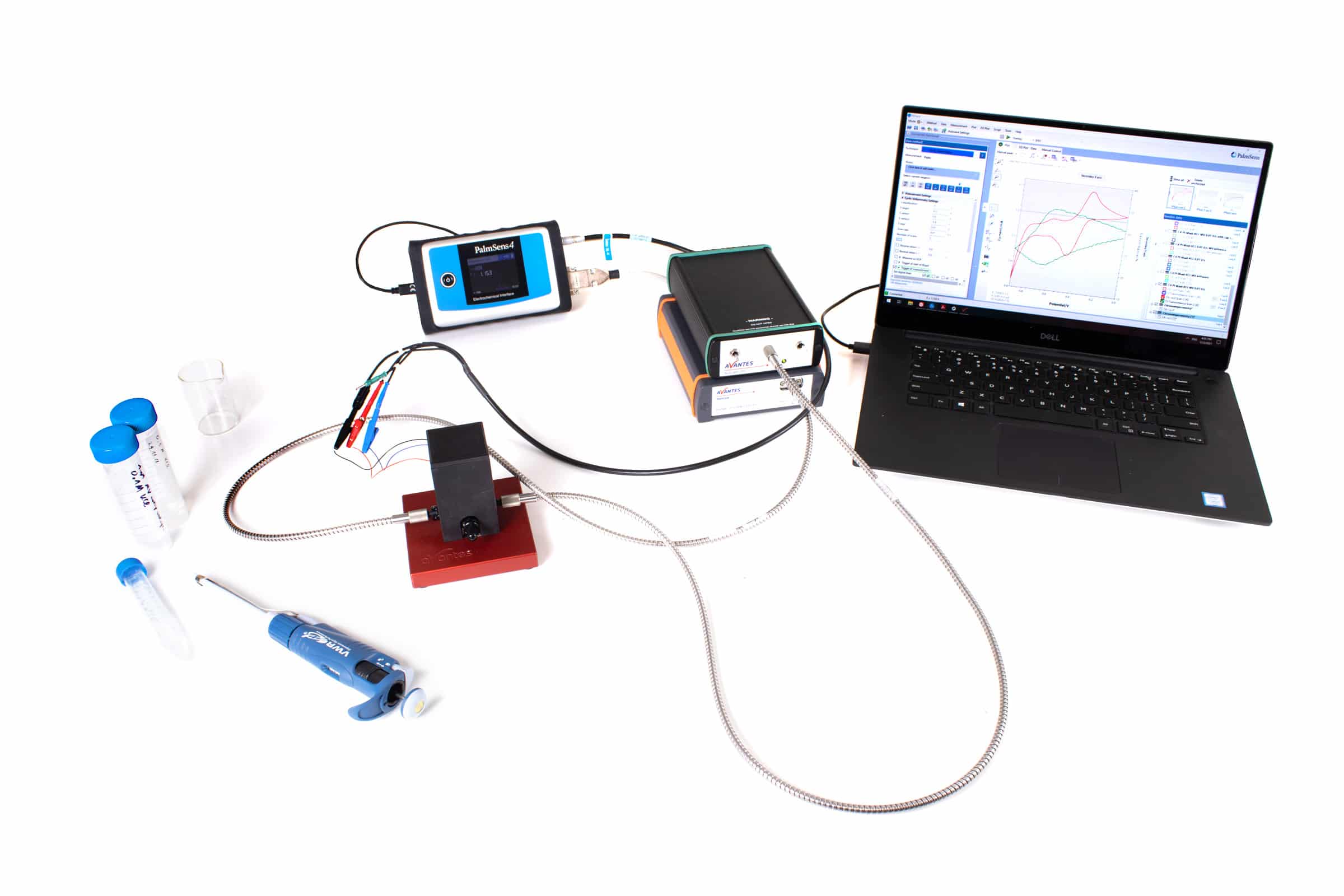
Get more insight into electrochemistry by adding a spectrometer to your potentiostat. This application note describes how to perform spectroelectrochemistry with a PalmSens4 and an Avantes potentiostat. More information about spectro-electrochemical potentiostats here.
Multichannel, polypotentiostat or multiplexer
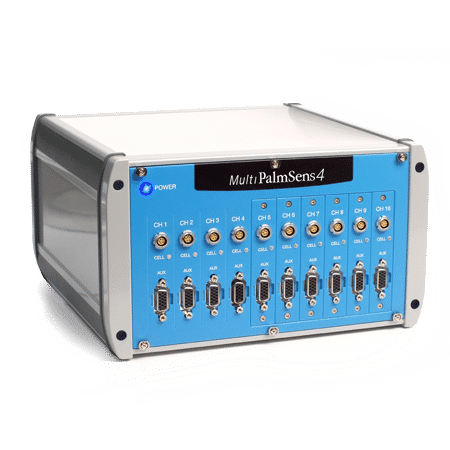
This will help you to choose the ideal multi-channel instrument for your application.
IR-Compensation and Uncompensated Resistance
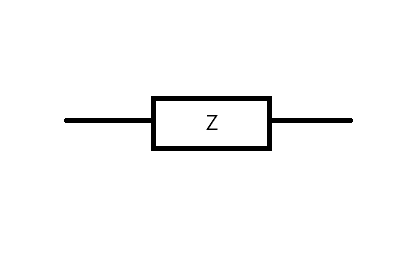
In this application note it is explained how to use the iR compensation module of the Nexus, PalmSens4 and EmStat4X. We start by explaining the terminology and what issue is resolved by the iR compensation module. Then we show possibilities to determine the uncompensated resistance.
Characterization of Field Effect Transistors
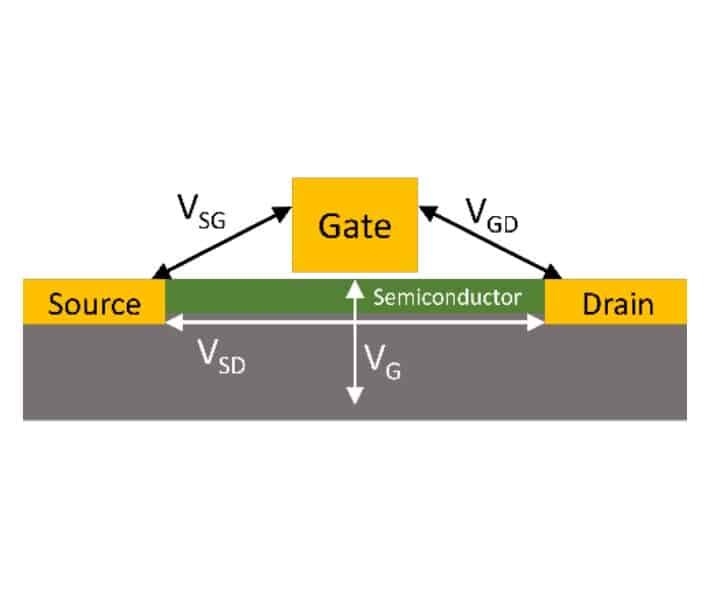
Characterization of a Field-effect Transistor (FET) using an EmStat Pico potentiostat module.
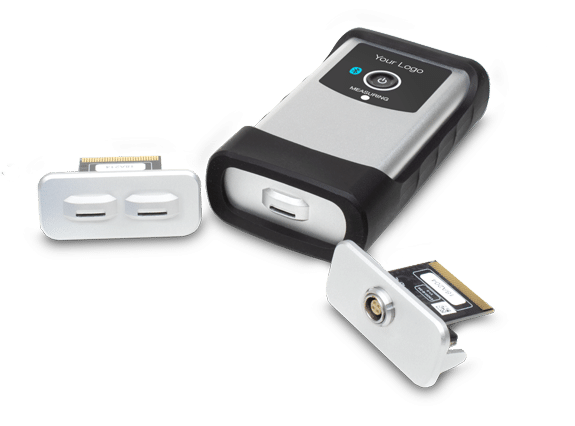
Possibilities and features of a customizable potentiostat: EmStat Go
The EmStat Go is a battery powered handheld potentiostat with the logo of your company. It can be fully customized to enable many electrochemistry applications. Read more drop det...
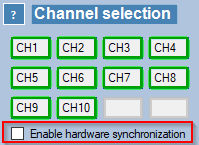
Multiple Working Electrodes in the Same Cell
Learn how to use a multi-channel potentiostat as a polypotentiostat, so you can use multiple working electrodes in the same cell sharing one reference and one counter electrode (cell array).
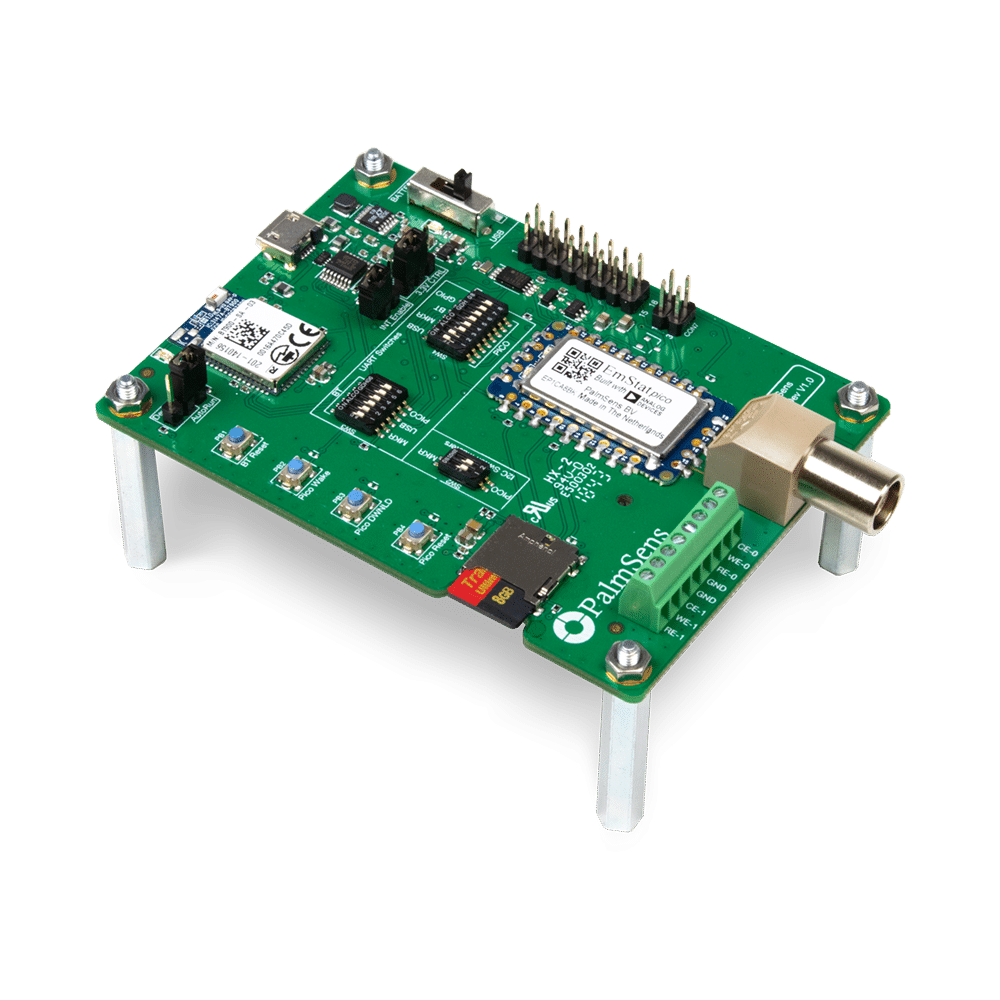
Update the Firmware on the EmStat Pico Development Boards
This article will explain how to update the software of your EmStat Pico Development Board, Sensit BT or Sensit Smart using PSTrace. ...
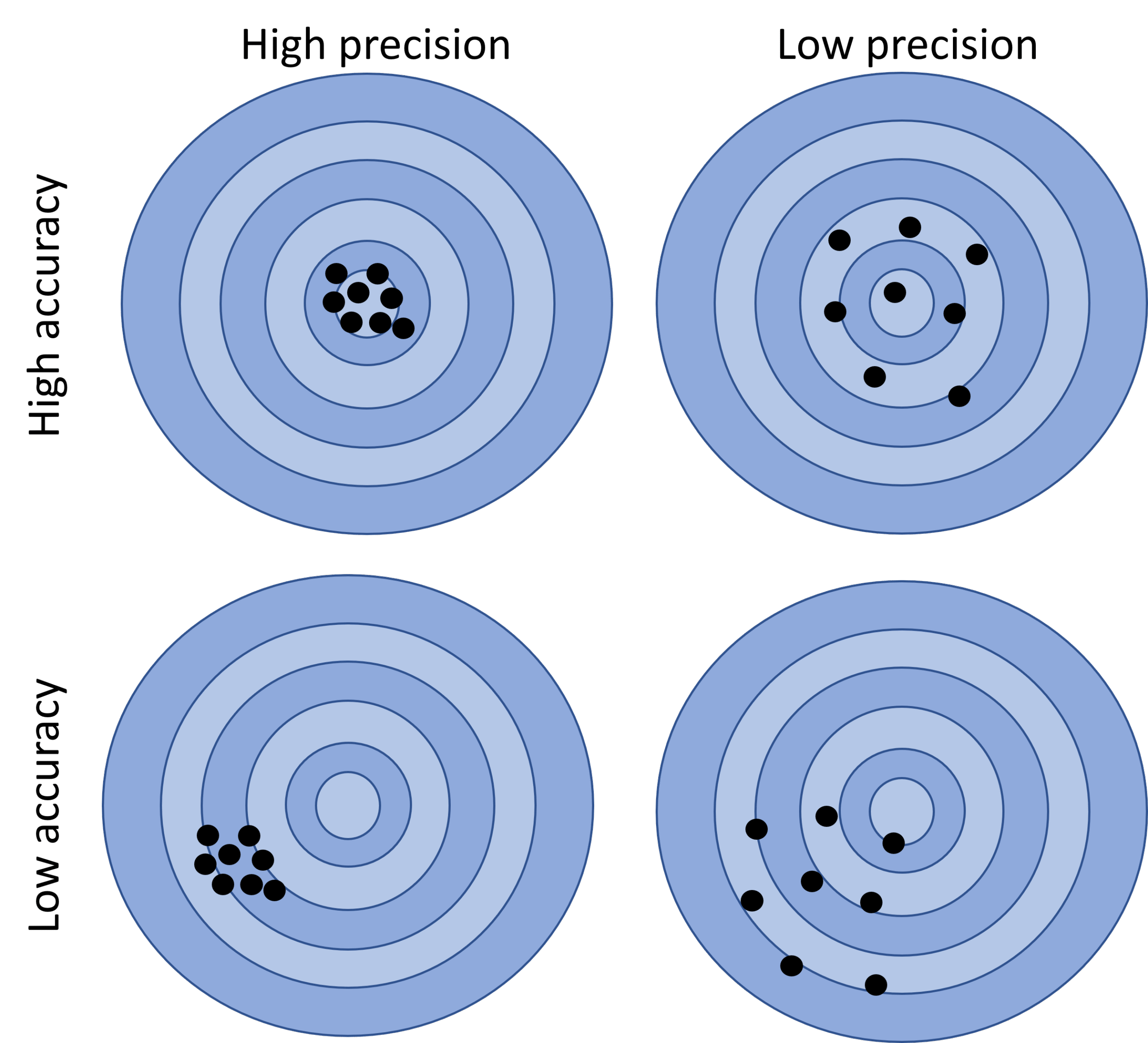
Potentiostat parameters and specifications explained
The specifications of potentiostats contain many parameters. If you are in doubt about the meaning of a certain parameter, worry no more. Below you will find an explanation for the...

Changing Wireless Communication Settings for OEM
This tutorial describes how to change the settings of the LAIRD BT900 Wireless communication module on PalmSens devices for OEM.
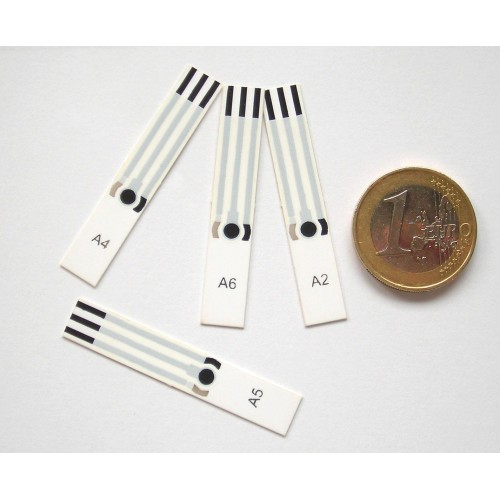
Heavy metal analysis of river water using the IS-HM sensor
This application note provides a comprehensive set of instructions for use of the screen-printed electrode (SPE) IS-HM in analyzing Pb, Cd, and Cu concentrations of a polluted river water sample.
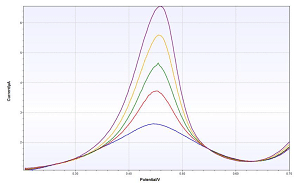
Mercury analysis using the ItalSens-Au sensor
A comprehensive set of instructions for use of the screen-printed electrode (SPE) IS-Au for determining the Hg concentrations of aqueous solutions.
Test Procedure for ItalSens IS-C Graphite Sensors
This application note is used to verify the IS-C (graphite) sensors and their electrochemical stability.
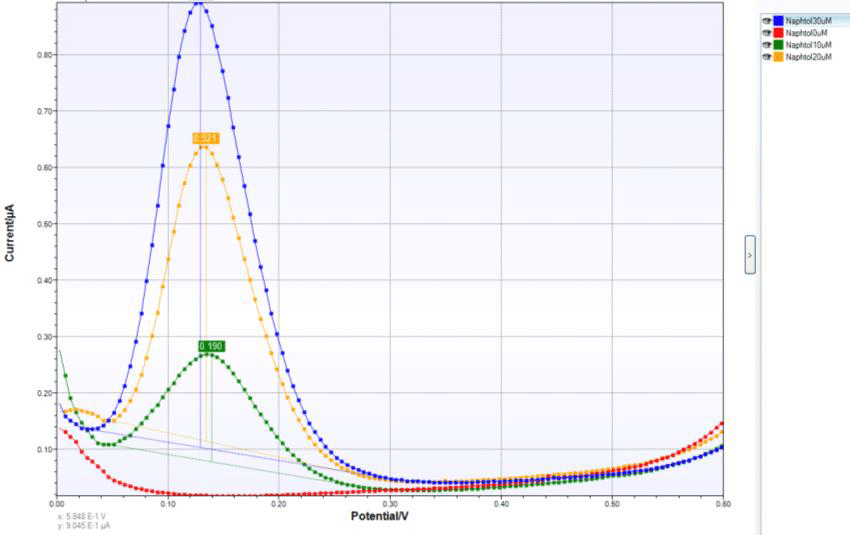
Measuring Naphthol with carbon electrodes (IS-C)
The screen-printed carbon electrodes by ItalSens IS-C have been characterized by measuring naphthol, and can also be used for quantification of naphthol.